ملخص

اتحاد اليد يعلن رزنامة الموسم الجديد

اتحاد اليد يعلن رزنامة الموسم الجديد

أعلن الاتحاد القطري لكرة اليد رسمياً عن أجندة وبطولات الموسم الرياضي المحلي الجديد 2026-2027، التي تتضمن جدولاً زمنياً متكاملاً وشاملاً لمنافسات الرجال ومختلف مسابقات الفئات السنية، وذلك في خطوة تعكس حرص الاتحاد على انتظام المسابقات وتوفير البيئة التنافسية المثالية لجميع الأندية والفرق العاملة بمنظومة اليد القطرية لضمان أعلى مستويات الجاهزية الفنية والبدنية لجميع اللاعبين على مدار الموسم.
تتوزع منافسات الكبار للرجال على مدار الموسم المحلي وفق المواعيد المقررة بدقة لضمان انسيابية المنافسات؛ حيث تنطلق منافسات القسم الأول من الدوري العام للرجال يوم الإثنين 12 أكتوبرالقادم ، يليه انطلاق القسم الأول من كأس الاتحاد للرجال يوم الإثنين 7 ديسمبر 2026، وتتواصل المسابقات الكبرى في شهر أبريل من العام المقبل 2027 بإقامة مباريات نصف النهائي لبطولة كأس قطر للرجال يوم الخميس 1 أبريل 2027، بالتزامن مع انطلاق مرحلة التصفيات لبطولة كأس الأمير للرجال في اليوم ذاته لتشكل مسك الختام للمنافسات المحلية.
وعلى صعيد الفئات السنية، تحظى القطاعات العمرية باهتمام واسع واستثنائي عبر رزنامة مبكرة تنطلق تباعاً خلال شهري سبتمبر وأكتوبر 2026 لبناء قواعد صلبة للمستقبل؛ إذ انطلقت مباريات دوري الأشبال تحت 16 سنة (القسم الأول) يوم 20 سبتمبر الجاري ، ودوري الأمل تحت 14 سنة يوم 23 سبتمبر ، ودوري البراعم أ تحت 12 سنة (مهرجان البراعم) يوم 26 سبتمبر ، ودوري الناشئين تحت 18 سنة يوم 29 سبتمبر ، وتستكمل المسابقات بانطلاق دوري الشباب تحت 20 سنة (القسم الأول) يوم الخميس 1 أكتوبر القادم ودوري البراعم ب تحت 10 سنوات (مهرجان البراعم) 3 أكتوبر ، على أن يتم تحديد مواعيد بطولات الكؤوس الخاصة بالفئات السنية لاحقاً .
وفي سياق اخر أعلن اتحاد اليد في تعميم رسمي، عن إسقاط جميع العقوبات السارية والصادرة بحق اللاعبين والأجهزة الإدارية والفنية بالأندية، في خطوة تهدف إلى تعزيز روح الأسرة الواحدة ودعم مسيرة اللعبة بمختلف محاورها.
ويأتي هذا القرار من مجلس إدارة الاتحاد تقديراً للإنجاز التاريخي والمشرف الذي حققته الرياضة القطرية، والمتمثل في تتويج المنتخب الوطني للناشئين بالمركز الأول ولقب البطولة الآسيوية الحادية عشرة للناشئين (الأردن 2026)، والذي يجسد ثمرة الجهود الكبيرة ويعد مصدراً للفخر والاعتزاز لجميع منتسبي وأسرة كرة اليد القطرية. cricket-info.homes

YOUR BODY KEEPS THE SCORE: HOW MODERN PHYSIOTHERAPY USES DATA TO KEEP YOU MOVING

How long until I can get back to normal?

But what if physiotherapy could play a role long before “normal” becomes the goal? What if the subtle changes in the way you move, run, jump, land, lift or recover could provide clues about how your body is coping with the demands you’re placing on it?

Physiotherapy isn’t simply about treating pain. It is about understanding how your body moves, how it responds to load, where strength or mobility may need attention, and what can be done to help you recover, perform and stay active with confidence.

And increasingly, modern physiotherapy has another powerful tool at its disposal: data.

At UPANDRUNNING, we combine clinical expertise with objective measurement, using VALD Performance technology to help assess physical capacity, track progress and support clinical decision-making. This World Physiotherapy Day on 8th September, we’re looking beyond the traditional idea of physiotherapy.

Because sometimes, the most valuable physiotherapy appointment is the one you have before an injury becomes a major problem.

YOUR BODY DOESN’T ALWAYS GIVE YOU A WARNING IN THE FORM OF PAIN

Pain is an important signal, but it isn’t the only signal that something has changed. Long before an injury becomes painful, there may be changes in: Strength, joint mobility, balance, coordination, movement control, running or landing mechanics, exercise technique, training tolerance, recovery, overall physical capacity.

These changes don’t automatically mean an injury is about to happen. There is no perfect movement pattern that guarantees you will never get injured. Instead, physiotherapists look at the bigger picture: how your body is functioning and how that function matches the demands you’re placing on it.

For example, imagine a recreational runner who has recently increased their weekly mileage. They may feel completely fine. But perhaps their calf strength isn’t keeping pace with their training demands, their ankle mobility is restricted, and they’re accumulating fatigue because their recovery hasn’t increased alongside their workload.

None of these factors alone necessarily means an injury is coming. Together, however, they may provide useful information. The goal of physiotherapy isn’t to predict the future. It’s to identify opportunities to improve capacity, movement and resilience before a small problem becomes a major interruption.

THINK OF YOUR BODY AS A PERFORMANCE SYSTEM

One of the easiest ways to understand sports physiotherapy is to think about the relationship between load and capacity. Your body has a certain capacity to tolerate physical stress.

Training applies load. Recovery allows your body to adapt to that load. When the relationship between the two is well managed, your body can adapt and become stronger. But when the demands placed on your body consistently exceed its current capacity, problems can develop.

This doesn’t only apply to elite athletes. It applies to anyone who is active.

Consider someone who normally runs twice a week but suddenly decides to train for a marathon. Their motivation may increase overnight. Their running shoes may be ready. Their training plan may be downloaded. But their body’s capacity hasn’t magically doubled.

The same principle applies when:

  • You return to the gym after several months away.
  • You suddenly increase the weight you’re lifting.
  • You start playing football every weekend.
  • You add extra HIIT sessions to your routine.
  • You return to sport after an injury.
  • You dramatically increase your running distance.
  • You start training for a competition.

The question isn’t simply: “Can I do this?”

A better question is: “Has my body developed the capacity to tolerate this amount of this type of load?”

That’s a very different question. And it’s one that physiotherapy can help you answer.

WHY “I FEEL FINE” DOESN’T ALWAYS MEAN “EVERYTHING IS FINE”

Feeling good is obviously a positive sign. But in sports medicine, symptoms are only one part of the picture. Think about a professional athlete preparing for competition. They may not be experiencing pain, but that doesn’t mean there is nothing to assess.

A physiotherapist might examine:

Strength: Is one muscle group significantly weaker than expected? Can the athlete generate and control force effectively?

Mobility: Do the joints have the range of movement required for their sport?

Control: Can the athlete maintain good control when movement becomes fast, demanding or fatigued?

Balance & coordination: Can they maintain stability while performing sport-specific movements?

Load tolerance: Has their body adapted to the volume and intensity of their current training?

Technique: Are there opportunities to improve how they perform particular movements?

This is why a sports physiotherapy assessment isn’t only useful after injury. It can also be useful when you’re performing well and want to keep performing well.

THE RISE OF DATA-DRIVEN PHYSIOTHERAPY

There is an important question that every patient wants answered during rehabilitation:

“Am I actually getting better?”

Traditionally, physiotherapy has relied on a combination of symptoms, clinical assessment and functional testing to answer that question. These remain essential. But modern sports physiotherapy has another increasingly valuable tool: objective data.

At UPANDRUNNING, we take a data-driven approach to physiotherapy using VALD Performance technology to objectively assess physical performance, track changes over time and help inform clinical decision-making. The goal isn’t to turn rehabilitation into a numbers game. It’s to make progress more visible.

From “I Feel Stronger” to “We Can Measure It”

Imagine you’ve been rehabilitating a knee injury for several weeks. You feel better. You’re walking comfortably. You’re back in the gym. Your confidence is returning. All of those things matter.

But your physiotherapist may also want to know:

  • Has your strength actually improved?
  • Is there still a meaningful difference between your limbs?
  • Are you producing force at the level expected for your stage of rehabilitation?
  • Are you progressing at the appropriate pace?
  • Is your injured side catching up with your stronger side?
  • Are you ready for the next stage of rehabilitation?

This is where objective measurement can add another layer to the clinical picture.

Using VALD Performance technology, physiotherapists can measure aspects of physical performance and compare results over time.

Instead of relying solely on how an exercise feels on a particular day, we can begin to build a picture of how your physical capacity is changing throughout rehabilitation.

WHY OBJECTIVE DATA MATTERS IN PHYSIOTHERAPY

Pain is subjective. Confidence is subjective. Perceived effort is subjective. And all three are incredibly important. But they don’t tell the whole story.

Objective testing can provide additional information that helps clinicians understand what is happening beneath the surface. For example, a patient may report that their injured leg “feels almost normal.” That’s encouraging. But testing might reveal that a meaningful strength deficit remains. Alternatively, a patient might feel apprehensive about returning to sport even though objective measures show substantial improvements in strength and physical capacity.

In both situations, the data can help guide the conversation. The number doesn’t make the decision. The clinician interprets the number in context. Data should support clinical reasoning, not replace it.

VALD PERFORMANCE: TURNING PHYSICAL PERFORMANCE INTO MEASURABLE INFORMATION

VALD Performance develops technology designed to measure human performance, movement and physical capacity. Within a sports medicine environment, technologies such as VALD’s assessment systems can provide clinicians with objective measurements that can be used to establish baselines, monitor progress and support rehabilitation decisions.

This can be particularly valuable when working with athletes because returning to sport isn’t simply about whether an injury hurts less. It’s about whether the body has regained the capacity to handle the demands of the sport.

The more clearly we can measure relevant physical qualities, the more precisely we can monitor progress towards those demands.

Baseline. Build. Re-Test. Progress.

One of the biggest advantages of objective testing is that rehabilitation becomes a journey that can be measured.

A simplified process might look like this:

  1. Establish a baseline

Testing provides an objective snapshot of physical capacity at a particular point in time.

  1. Identify priorities

The results can help the physiotherapist determine which physical qualities may require greater attention.

  1. Train and rehabilitate

A personalized program is developed based on the individual’s injury, goals and physical demands.

  1. Re-test

After an appropriate period of rehabilitation, measurements can be repeated.

  1. Compare

The physiotherapist can evaluate changes and determine whether the patient is progressing as expected.

  1. Adjust

The rehabilitation program can then be progressed, modified or redirected based on the wider clinical picture.

This creates a more objective feedback loop:

Assess → Treat → Measure → Adapt → Reassess.

And that is one of the defining characteristics of modern sports physiotherapy.

DATA DOESN’T REPLACE THE PHYSIOTHERAPIST

It’s worth emphasizing something. Technology doesn’t diagnose an injury. A force measurement doesn’t understand your training schedule. A graph doesn’t know that you’re nervous about returning to competition. And a percentage change can’t tell the whole story of your recovery.

That’s why technology is most powerful when combined with an experienced physiotherapist. A clinician can put the data into context.

They can consider your symptoms, injury history, goals, training load, movement quality, sport-specific requirements and psychological readiness alongside your test results.

In other words: The technology provides information. The physiotherapist provides interpretation. That’s the combination that makes data genuinely useful.

PHYSIOTHERAPY ISN’T JUST ABOUT FIXING THE PAIN

One of the biggest misconceptions about physiotherapy is that its primary purpose is to make pain disappear.

Pain management can absolutely be part of rehabilitation. But a successful rehabilitation program should go further.

Imagine an athlete who develops knee pain. Reducing their symptoms is important.

But if they return to exactly the same training habits, physical demands and movement challenges that contributed to the problem in the first place, simply reducing pain may not be enough.

Rehabilitation may therefore involve several stages:

  1. Understanding the problem

A physiotherapist assesses the injury, symptoms, movement and relevant contributing factors.

  1. Managing symptoms

The initial goal may be to help settle symptoms and maintain as much appropriate activity as possible.

  1. Restoring movement

Restricted mobility may need to be addressed depending on the individual’s presentation.

  1. Rebuilding strength

The injured area and surrounding structures need to progressively tolerate more load.

  1. Developing capacity

The body needs to tolerate the demands of everyday life—and eventually sport.

  1. Reintroducing sport-specific demands

Running, jumping, cutting, lifting, throwing or other relevant movements can gradually become part of rehabilitation.

  1. Returning to performance

The final goal isn’t necessarily just being pain-free.

For an athlete, the goal may be returning to the level of performance they need for their sport. That’s a much higher standard.

“REST UNTIL IT GETS BETTER” ISN’T ALWAYS THE ANSWER

Rest has a role in injury management. But rest and recovery aren’t necessarily the same thing. If you’ve injured yourself, immediately returning to your normal training load may be inappropriate. But completely stopping all movement for an extended period may also reduce strength, fitness and confidence.

Modern rehabilitation often focuses on appropriate loading rather than simply avoiding activity. The exact approach depends on the injury, symptoms, individual circumstances and stage of recovery.

For example, rehabilitation may progress from simple movements to resistance exercises, then to more complex movements, and eventually to sport-specific activities.

The principle is simple: Give the body the right stimulus at the right time. Too much, too soon can aggravate an injury. Too little for too long can leave the body underprepared for the demands it eventually needs to meet. Physiotherapy helps navigate that middle ground.

THE MOST IMPORTANT MUSCLE IN INJURY PREVENTION MIGHT BE YOUR BRAIN

Physical rehabilitation is only part of recovery. Injury can change how you think about movement. You may become cautious about putting weight through an injured leg. You may hesitate before changing direction.

You may worry about reinjury. You may unconsciously protect the area that previously hurt. These responses are understandable.

But confidence is an important part of returning to activity. This is another reason rehabilitation should be progressive.

When an athlete gradually experiences successful movement under increasing levels of challenge, they can rebuild not only physical capacity but also confidence in what their body can do.

The objective isn’t to convince someone that they “shouldn’t be scared.”

It’s to help them develop the physical and psychological confidence that comes from being prepared.

FIVE SIGNS IT MIGHT BE TIME TO SEE A PHYSIOTHERAPIST

You don’t necessarily need to wait until you have a serious injury. Consider speaking with a physiotherapist if:

  1. A “small” pain keeps coming back

If the same pain repeatedly appears during or after training, it’s worth understanding why.

  1. Your performance has changed

If you suddenly can’t run as far, lift the same weights or perform movements that previously felt easy, something may have changed.

  1. You’re compensating

If you find yourself changing the way you walk, run, lift or train to avoid discomfort, an assessment may be helpful.

  1. You’re increasing your training

Starting a new sport, increasing mileage or preparing for a major event can be an ideal time for a preventative assessment.

  1. You’re returning after an injury

Returning to your old routine doesn’t necessarily mean your body is ready for the same demands. A structured rehabilitation program can help bridge that gap.

THIS WORLD PHYSIOTHERAPY DAY, THINK BEYOND INJURY

World Physiotherapy Day is an opportunity to recognize physiotherapists and the role they play in helping people move and recover.

But perhaps the bigger message for active people is this: You don’t have to wait for your body to break before you start taking care of it.

Physiotherapy can be part of injury rehabilitation, but it can also be part of performance, preparation, movement education and long-term physical health.

Your body is constantly adapting to the demands you place on it. Your training changes. Your workload changes. Your goals change. Your previous injuries matter. Your recovery changes. And your body responds accordingly.

The smartest approach isn’t to eliminate every possible risk—because that isn’t realistic. It’s to understand your body, build appropriate capacity and know when to seek professional guidance.

This World Physiotherapy Day, celebrate the profession by changing the way you think about physiotherapy. Don’t just rehabilitate your body when it breaks down. Invest in it while it is working well.

If you’re dealing with a sports injury, returning to activity after an injury, increasing your training load or simply want to understand how your body is moving and performing, a sports physiotherapy assessment can be a valuable place to start.

Speak to our sports medicine team to find out how physiotherapy, objective performance testing and personalized rehabilitation can support your recovery, performance and long-term movement health.

Not Sure Where to Start?

Book an appointment with our doctors. We will create a personalized treatment plan for you.

Kids go free on Friday at Abu Dhabi Grand Prix 2026

4-day ticket holders can redeem up to 4 children’s tickets for complimentary access to the Abu Dhabi F1 Fanzone and Oasis areas on Friday, December 4. The Formula 1 Etihad Airways Abu Dhabi Grand Prix has brought back its Kids Go Free Friday offer for its 2026 edition. 4-day ticket holders can bring along their […]

The post Kids go free on Friday at Abu Dhabi Grand Prix 2026 appeared first on What's On.

In brief

ثنائي المنتخب القطري ينافس على برونزية البطولة الآسيوية للكرة الطائرة الشاطئية يواجه الثنائي القطري شريف يونس وأحمد تيجان غدا الأحد، نظيره الصيني وو جياشين و تشو، في مباراة تحديد صاحب المركز الثالث ببطولة الاتحاد الآسيوي للكرة الطائرة الشاطئية 2026 المقامة حاليا في مدينة شانغلو الصينية. وكان الثنائي القطري قد خسر أمام الثنائي الأسترالي نيكولايديس وكاراتشير بشوطين مقابل شوط، في الدور نصف

الدوري الإنكليزي: أرسنال يواصل بدايته المثالية ويلحق بتشلسي هزيمته الأولى مع ألونسو في مواجهة بين فريقين خرجا منتصرين من المرحلتين الأوليين، حسم أرسنال حامل اللقب لقاء الديربي أمام جاره وضيفه تشلسي بعدما حول تخلفه إلى فوز 2-1 الأحد في الدوري الإنكليزي الممتاز لكرة القدم. وبتأكيده تفوقه على جاره الذي لم يفز على […] The post الدوري الإنكليزي: أرسنال يواصل بدايته المثالية ويلحق

Qatar Classic set for star-studded return Doha, Qatar: Qatar is once again preparing to welcome the world’s leading squash stars as the Qatar Classic 2026 brings another week of world-class action to Doha from September 12 to 18. The prestigious PSA World Tour Platinum event will return to the iconic Khalifa International Tennis and Squash Complex,

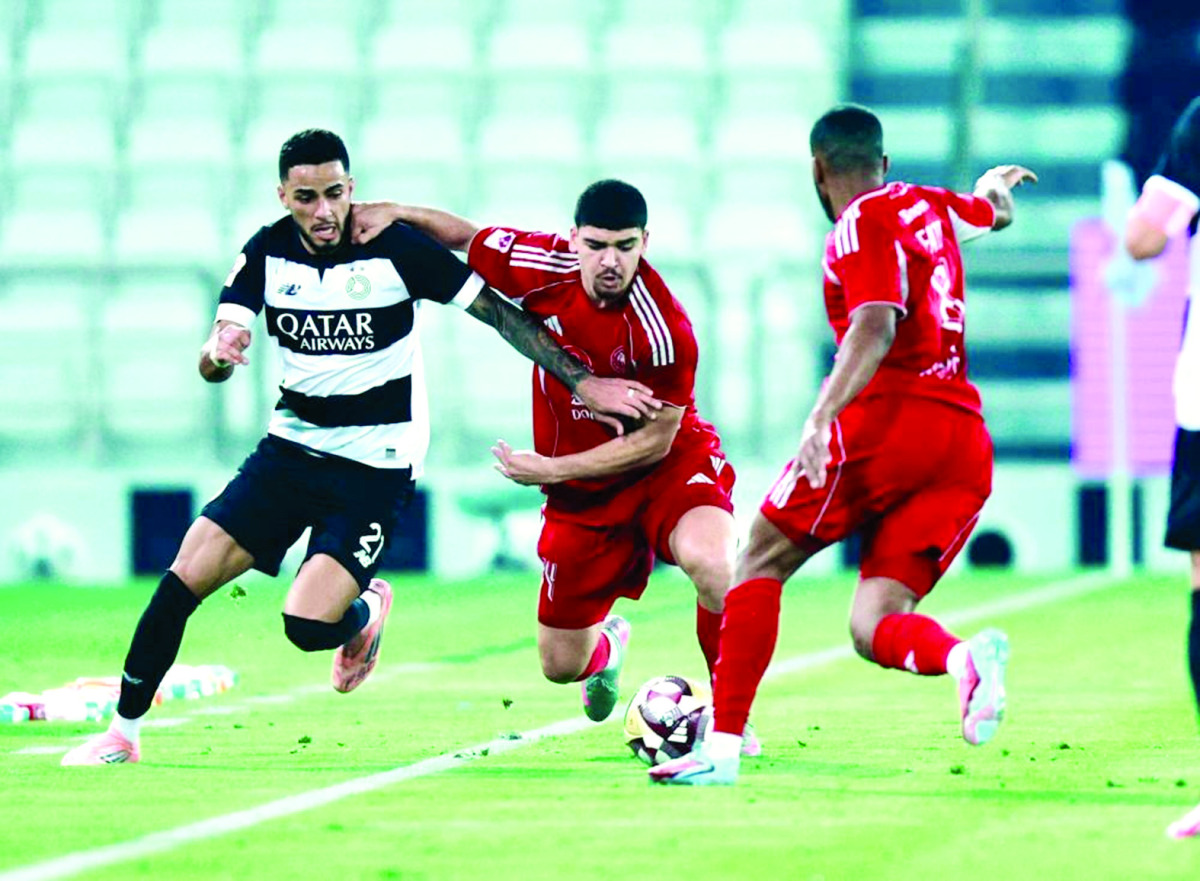
تعادل الريان والدحيل في الجولة الثالثة من دوري نجوم الدوحة تعادل الريان والدحيل بهدف لمثله في اللقاء الذي جرى بينهما، اليوم، على استاد أحمد بن علي، في الجولة الثالثة من الدوري القطري لكرة القدم /دوري نجوم بنك الدوحة/. وتقدم الريان عبر البرازيلي روجر غيديش في الدقيقة (5)، فيما أدرك الدحيل التعادل عن طريق تحسين محمد في الدقيقة (72). ورفع الريان

Teams blast UEFA chief over ‘uninteresting’ matches remark Los Angeles, USA: A group of 13 World Cup teams on Sunday hit out at UEFA President Aleksander Ceferin over reported remarks in which he said this year’s expanded tournament would lead to many “completely uninteresting” matches. In a joint statement, the 13 football associations including World Cup debutants Cape

الكواري رئيساً للجنة تحكيم جوائز قطر اختير حسن ربيعة الكواري، المدير التنفيذي للمبيعات والتسويق والاتصال في مؤسسة دوري نجوم قطر، رئيساً للجنة تحكيم جوائز قطر للفعاليات 2026، تقديراً لخبراته الواسعة في مجال تنظيم وإدارة الفعاليات والبطولات. وقاد السيد حسن أعمال لجنة التحكيم خلال معرض قطر للفعاليات (QES) الذي أقيم على مدار ثلاثة أيام، مساهماً بخبرته ورؤيته…